InTASC #7: Planning for Instruction
InTASC Standard #7 focuses on planning instruction that supports all areas of student growth—academic, social, and emotional. Effective planning requires understanding the curriculum, using student data, and knowing how to adjust lessons based on student needs. During student teaching, I learned how much thought and flexibility goes into daily and long-term planning. I had to consider pacing, student engagement, content goals, and how to support different learners through visuals, hands-on tasks, and writing. Good planning doesn’t just cover standards—it also creates space for creativity, exploration, and connection.
Planning is such a big part of teaching because no two groups of students are the same. Being able to adjust my lessons based on how students were doing in real time was one of the biggest takeaways from my student teaching experience. I saw the value in creating strong plans, but also the importance of changing them when something wasn’t working. The artifacts I’ve included on this page show how I used cross-curricular activities, flexible unit planning, and student choice to make instruction more effective and meaningful.
Artifact #1: Science and Writing Crossover Lesson
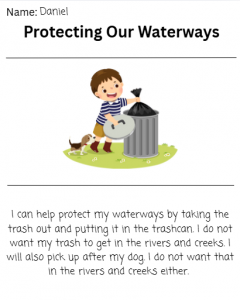
This artifact is from my Virginia natural resources unit and shows how I combined science content with English writing skills. After learning about watersheds and water sources, students were asked to write a journal entry about how they can protect their watershed and their environment, while bringing in the idea of “we all live downstream”. This activity supported science understanding while also giving students a chance to practice creative writing and paragraph structure. It was a fun way to tie subjects together and showed me how planning across content areas can make lessons more engaging and memorable.
Artifact #2: Two-Week Unit Plan on Virginia Natural Resources
This unit plan helped guide my instruction during student teaching and is a good example of how I planned with flexibility. I adjusted the pace based on student understanding and used pre- and post-tests to see what needed more review. For example, I noticed students were struggling with the term “watershed,” so I planned extra time for review and added a diagram activity. Planning a full unit like this taught me how to build in chances for reteaching and reflection. I also included time for hands-on and visual activities to meet the needs of different learners.
Artifact 3: Choice-Based Review Activities
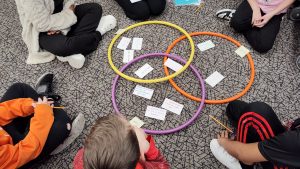
As part of my instructional planning, I designed a variety of review stations that allowed students to revisit key concepts in the way that best fit their learning style. These included a vocabulary matching game, a fill-in-the-blank worksheet, a digital Quizlet review, a hula hoop sorting station where students placed resource cards into labeled hoops to show understanding of categories, and a Jeopardy-style review game for whole-group engagement. While each station served a different purpose, they all supported active participation and offered students meaningful choice in how they reviewed. This artifact demonstrates my ability to plan flexible, differentiated instruction that supports diverse learners and encourages student ownership of their learning.
Hula Hoop Sorting and Matching Venn Diagram Review Game