InTASC #8: Instructional Strategies
InTASC Standard #8 focuses on using a variety of instructional strategies to help all students access and engage with content. Teachers should select strategies that match the lesson goals, support different learning styles, and encourage students to make meaningful connections between concepts. Effective instruction is more than just presenting material—it involves planning engaging, appropriate activities that promote critical thinking, collaboration, and real-world application. Throughout student teaching, this standard came into focus as lessons had to be adjusted in real time based on student understanding and classroom dynamics.
Whether it was through hands-on activities, technology integration, or interactive discussions, I aimed to create meaningful and engaging lessons that were aligned with the learning objectives.
Below are three examples of instructional strategies that helped students actively engage with content and deepen their understanding of key concepts in the lesson plans.
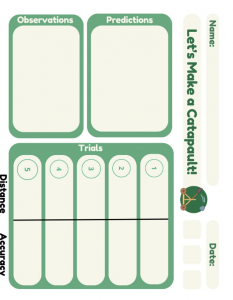
Artifact #1: Hands On Catapult Activity
For this activity, students built simple catapults to explore forces and motion. The hands-on nature of the activity allowed them to apply their knowledge of force and motion while engaging in an inquiry-based learning process. By incorporating group collaboration, students could compare their designs and results, providing an opportunity to discuss the concept of forces more deeply. Additionally, I used questioning strategies, such as asking how different amounts of force affect the distance traveled by an object, to prompt higher-order thinking and assess student understanding.
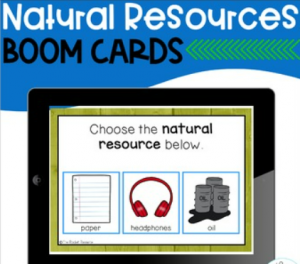
Artifact #2: Boom Cards Digital Review
Boom Cards are an interactive online tool I used to support independent learning during my student teaching. I created a set focused on natural resources vocabulary and included self-checking tasks with visual and audio elements to support different learning styles. This strategy allowed students to work at their own pace while still getting immediate feedback. It was especially effective for students who enjoyed digital learning or needed extra repetition. The variety of card types helped reinforce key terms in a fun, low-pressure way.
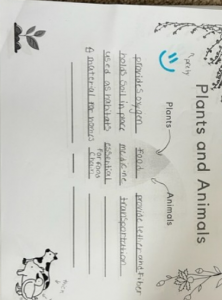
Artifact #3: Venn Diagram Comparison (Plants and Animals as Natural Resources)
In the Plants and Animals section of my natural resources lesson plan, students used a Venn diagram to compare and contrast plants and animals as natural resources. This activity required students to think critically about the different ways plants and animals provide for human needs, such as food, shelter, and clothing. By visually organizing the similarities and differences between the two, students were able to deepen their understanding of how both plants and animals contribute to our daily lives and the environment. This strategy helped to solidify the concept of interdependence in nature.